Mainframe Decoupling via Change Data Capture: Modernizing Core Banking with Apache Kafka
A technical case study on how a regional commercial institution modernized its core transaction processing, cutting daily batch reconciliation latency from 7 hours to 14 milliseconds using Debezium CDC and Kafka event streams.
A technical case study on how a regional commercial institution modernized its core transaction processing, cutting daily batch reconciliation latency from 7 hours to 14 milliseconds using Debezium CDC and Kafka event streams.
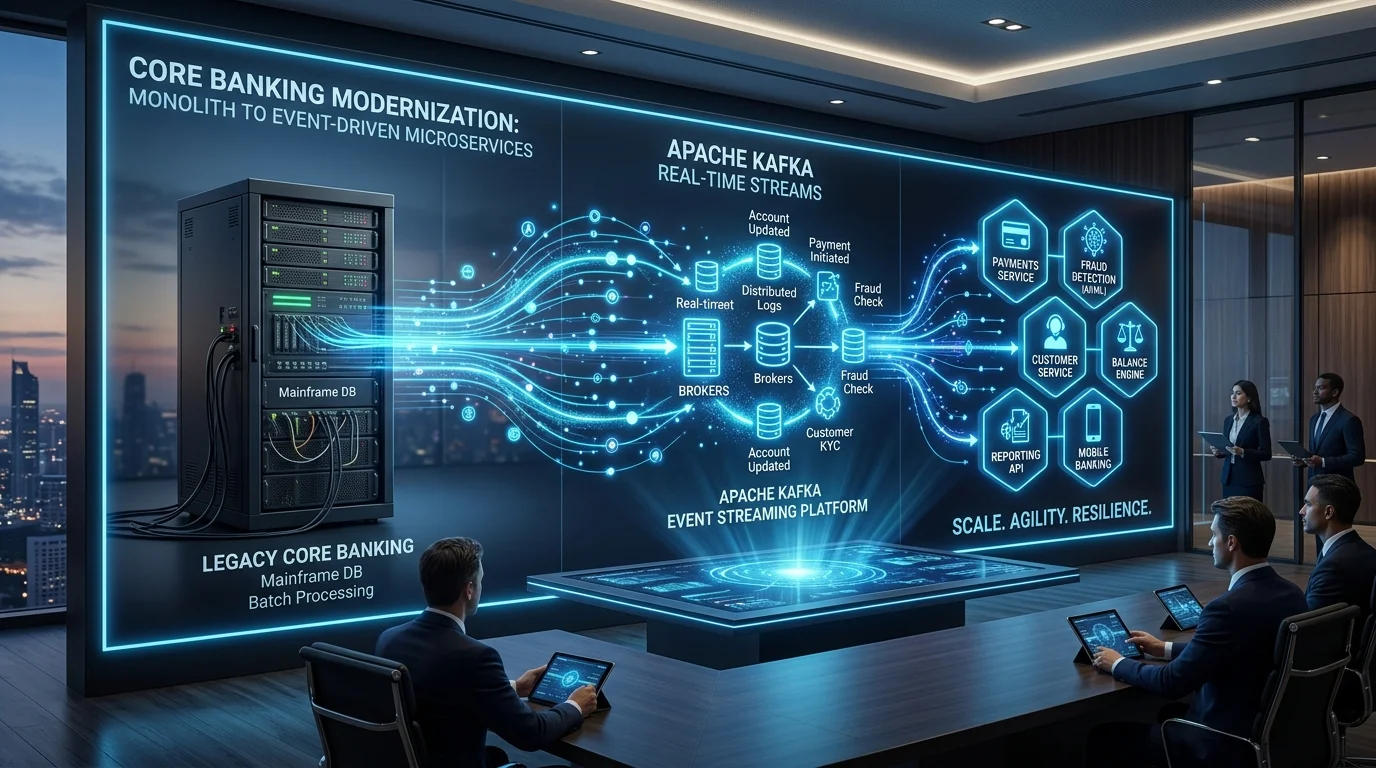
Regional financial institutions face intense competition from agile neobanks offering instant transaction alerts, sub-second split-payments, and real-time fraud scoring. Yet most traditional banks remain anchored to 30-year-old COBOL mainframe transaction engines that process customer balances in overnight batch windows.
A wholesale 'rip and replace' of a core banking engine carries catastrophic operational risk. The proven engineering strategy is asynchronous event interception.
1. The Challenge: Batch Latency and Customer Churn
Our client, a commercial bank managing $4.2B in assets across 120 regional branches, suffered from severe architectural bottlenecks:
2. The Solution: Debezium Change Data Capture & Kafka Mesh
Rather than refactoring the core COBOL ledger, KNetwork implemented the Strangler Fig Pattern by deploying non-intrusive log-based Change Data Capture:
[ Core Transaction Database (DB2 / Oracle) ]
                    │
                    ▼ (Zero-Query Read from Transaction WAL Log)
[ Debezium CDC Connector Engine ]
                    │
                    ▼ (Avro Serialized Event Stream)
[ Distributed Apache Kafka Cluster (3-Node Quorum) ]
   ├─ Topic: ledger.transactions.v1
   ├─ Topic: accounts.balance-updates.v1
   └─ Topic: security.fraud-signals.v1
                    │
   ┌────────────────┼────────────────┐
   ▼                ▼                ▼
[ Mobile API Read-Model ] [ Fraud Analytics ML ] [ Audit Telemetry ]
   (Sub-15ms Redis Cache)   (Real-time Scorer)    (Immutable S3 WORM)
[!IMPORTANT]
Because Debezium reads directly from the database transaction logs (redo log buffers), zero SQL queries hit the active database engine, preserving 100% of mainframe compute capacity for write operations.
3. Business & Technical Impact
┌──────────────────────────────────────┬────────────────┬────────────────┐
│ Metric                               │ Legacy Mainframe│ Kafka CDC Mesh │
├──────────────────────────────────────┼────────────────┼────────────────┤
│ Balance Reflection Latency           │ 4 to 8 Hours   │ 14 Milliseconds│
│ Mobile API Read Contention on DB2    │ 84% Peak Load  │ 0% (Redis Tier)│
│ Daily Settlement Processing Duration │ 7.2 Hours      │ Continuous Sync│
│ System Uptime During Peak Promotions │ 97.4%          │ 99.995%        │
└──────────────────────────────────────┴────────────────┴────────────────┘
By streaming immutable ledger events to a high-speed Redis read-model tier, mobile app response times dropped to sub-50ms globally while completely eliminating query timeouts on the central ledger.
Executive & Technical Inquiries
Key questions addressed during enterprise architectural reviews.
Insight Specifications
Practice Lead
KNetwork Platform Architecture Team
Core Systems Practice
Advising global enterprise clients on distributed software architecture, private cloud migrations, and mission-critical system design.
Modernize Your Architecture
Connect directly with our engineering leadership to evaluate your enterprise roadmap and technical architecture.
Request Architecture BriefingRelated Enterprise Perspectives
Explore All Insights→Architecting Sovereign Enterprise RAG: Air-Gapped LLM Deployments for Regulated FinTech
How regional banks and wealth management institutions deploy sovereign Retrieval-Augmented Generation inside isolated VPC boundaries with zero public model telemetry, verifiable source citations, and deterministic JSON schemas.
Sub-Second Flash Inventory Sync: Distributed Redis Locking Across 500+ Omnichannel Stores
A technical analysis on eliminating inventory overselling and cart checkout race conditions during high-volume promotional sales using Redis distributed locks (Redlock) and edge POS synchronization.
Engage with our senior architecture practice.
Explore how this methodology applies to your proprietary technology stack and compliance requirements.